Mistral AIDense

Saba RAM Calculator

For Saba, plan about 32GB system RAM at Q4_K_M / 8K context for this 24B dense mid model (33K-token window). Saba weights are available for local runtimes (llama.cpp / Ollama / vLLM class stacks) β€” buy kits you can fill with dual-channel DDR5 (or ECC RDIMM on true workstations).

Mistral Saba is a 24B-parameter language model specifically designed for the Middle East and South Asia, delivering accurate and contextually relevant responses while maintaining efficient performance. Trained on curated regional...

Standard Recommendation

32GB RAM

Calculated for 4-bit (Q4_K_M) @ 8K Context

1. Workload

Inference sizes run-time memory. Training adds optimizer/activation headroom and steers toward ECC.

2. Hardware path

CPU + RAM offload path: full model weights reside in system RAM (llama.cpp / similar). Dual-channel DDR5 bandwidth is the speed bottleneck.

3. Quantization

GGUF-style bit widths for planning. Native FP4/FP8 trainer footprints can differ.

4. Context length

Grows KV cache (inference) or activation scratch (training ballpark).

8,192 tokens
VRAM Hardware Sizing Β· 16GB VRAM Single GPU

Recommended GPUs for Saba

⚑ 15.5 GB VRAM Required

Fits 100% inside a single 16GB consumer VRAM GPU. Full GPU acceleration provides instant token generation without system RAM offload bottlenecks.

Best Budget 16GB VRAM$449.99

MSI Gaming GeForce RTX 4060 Ti 16GB Ventus 2X Black OC

VRAM: 16GB GDDR6X
Bus Width: 128-bit
Bandwidth: 288 GB/s
Cores: 4,352 CUDA

Technical Hardware Note: The lowest-cost modern 16GB VRAM GPU on the market under $450. Eliminates system RAM offload bottlenecks for models fitting within 16GB VRAM.

Check Price & Availability on Amazon β†’
Best 16GB Speed & Bandwidth$799.99

ASUS TUF Gaming GeForce RTX 4070 Ti Super 16GB GDDR6X

VRAM: 16GB GDDR6X
Bus Width: 256-bit
Bandwidth: 672 GB/s
Cores: 8,448 CUDA

Technical Hardware Note: Features a 256-bit memory bus delivering 672 GB/s memory bandwidthβ€”2.3x faster token generation speed than 128-bit 4060 Ti cards.

Check Price & Availability on Amazon β†’
πŸ’‘
Technical Hardware Note: Memory bandwidth dictates generation speed. The 4060 Ti 16GB ($449) is the budget entry point, while the 4070 Ti Super ($799) 256-bit bus delivers 2.3x faster generation speed.

Inference bandwidth snapshot

DDR4 ~45 GB/s

3.3 t/s

DDR5 ~96 GB/s

7.1 t/s

Unified ~300 GB/s

22.2 t/s

VRAM ~1008 GB/s

74.7 t/s

Saba Quantization Comparison Matrix

Side-by-side RAM, VRAM, and GPU requirements across 4-bit, 8-bit, and 16-bit precision (at 8K context).

QuantizationWeight SizeTarget RAMVRAM ClassRecommended Hardware
4-bit (Medium)Active13.5 GB32 GB Kit15.5 GB1x RTX 4060 Ti (16GB) or RTX 4070 Ti Super (16GB)
8-bit (High)25.5 GB64 GB Kit29.5 GB2x RTX 3090 (48GB combined VRAM) or Mac Studio 64GB
16-bit (Lossless)48 GB64 GB Kit54 GB4x RTX 3090 / 4090 (96GB VRAM) or Apple Mac Studio (128GB Unified Memory)
Local AI Deployment Quickstart

Run Saba via Terminal (Ollama / vLLM)

πŸ€— Hugging Face Card β†’
Ollama CLI (Local Run):
ollama run mistral-saba
vLLM OpenAI Server (GPU Offload):
python3 -m vllm.entrypoints.openai.api_server --model mistralai/mistral-saba --gpu-memory-utilization 0.95
Host RAM target

32GB

Inference Β· CPU offload Β· Q4 K_M

Model weights:13.5 GB
KV cache:0.06 GB
OS / runtime:6 GB
Host total:19.6 GB

Kit picks (32GB)

Disclosure: As an Amazon Associate I earn from qualifying purchases. Rankings use price and spec data only β€” not paid placement. How we rank products

CORSAIR Vengeance RGB DDR5 RAM 32GB (2x16GB) Up to 6000MHz CL36-44-44-96 1.35V Intel XMP 3.0 Computer Memory – Black (CMH32GX5M2E6000C36)

UDIMM2-stick kit
$449.99$14.06/GBIn stock

Best match for dual-channel desktop boards (populate the recommended slots).

CORSAIR Vengeance RGB DDR5 RAM 32GB (2x16GB) Up to 6000MHz CL36-44-44-96 1.35V Intel XMP 3.0 Desktop Computer Memory - White (CMH32GX5M2E6000C36W)

UDIMM2-stick kit
$489.99$15.31/GBIn stock

Best match for dual-channel desktop boards (populate the recommended slots).

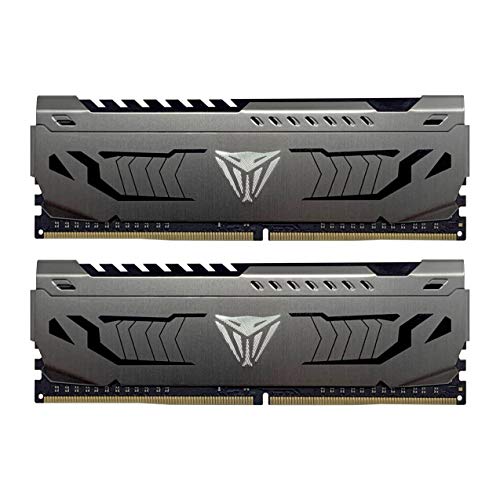
Patriot Viper Steel DDR4 RAM 32GB (2X16GB) 3600MHz CL18 Desktop Memory

UDIMM2-stick kit
$309.82$9.68/GBIn stock

Best match for dual-channel desktop boards (populate the recommended slots).

Kingston FURY Beast 32GB (2x16GB) 3600MT/s DDR4 CL18 Desktop Memory Kit of 2 KF436C18BBK2/32

UDIMM2-stick kit
$381.95$11.94/GBIn stock

Best match for dual-channel desktop boards (populate the recommended slots).

Timetec 32GB KIT(4x8GB) DDR3L / DDR3 1600MHz (DDR3L-1600) PC3L-12800 / PC3-12800 Non-ECC Unbuffered 1.35V/1.5V CL11 2Rx8 Dual Rank 240 Pin UDIMM Desktop PC Computer Memory RAM(SDRAM) Module Upgrade

UDIMMECC4-stick kit
$74.99$2.34/GBIn stock

Four sticks can stress the memory controller and lower stable XMP speeds on many consumer boards.

Confirm motherboard QVL / max capacity per slot before buying.

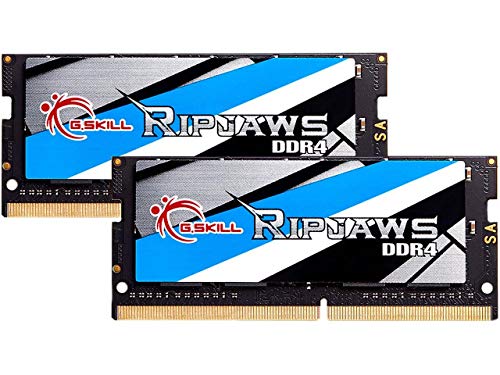
G.SKILL Ripjaws DDR4 SO-DIMM Series DDR4 RAM 32GB (2x16GB) Up to 3200MT/s CL22-22-22-52 1.20V Unbuffered Non-ECC Notebook/Laptop Memory SO-DIMM (F4-3200C22D-32GRS)

SO-DIMMECC2-stick kit
$199.95$6.25/GBIn stock

Laptop / mini-PC form factor β€” will not fit desktop DIMM slots.

Timetec 32GB KIT (2x16GB) DDR4 2666MHz (PC4-2666V) PC4-21300 SODIMM Laptop RAM – 260-Pin 1.2V CL19 Non-ECC Unbuffered Memory Module for Laptop, Notebook, Mini PC, All-in-One

SO-DIMMECC2-stick kit
$180.99$5.66/GBIn stock

Laptop / mini-PC form factor β€” will not fit desktop DIMM slots.

Why Saba pressures system RAM

Saba is a dense 24B network β€” every weight participates each token, so quantization choice dominates. Q4_K_M lands near ~13.5GB weights, plus ~0.06GB KV at 8K and ~6GB overhead (~19.6GB β†’ 32GB kit). The 33K-token context ceiling is the sleeper cost: long-doc or agent traces inflate KV while the 24B slab stays fixed. Prefer dual-channel DDR5 bandwidth when CPU offload or mmap is involved.

What RAM kit to buy

A 32GB dual-channel kit is enough for quantized Saba at modest context. Still prefer 2Γ— matched SO-DIMM/UDIMM sticks; 1x RTX 4060 Ti (16GB) or RTX 4070 Ti Super (16GB) covers the 16GB VRAM Single GPU GPU profile. If you chat with long pastes, jump a tier before the KV cache forces paging.

Workload notes

Mistral releases like Saba are common in production vLLM; dual-channel bandwidth helps prompt throughput when CPU offload is in play. At 24B, Saba is a practical mid-size local model β€” sweet spot for single-GPU Q4/Q8 experimenters who still want headroom for IDE + Docker. Release window noted as 2025/2026; always re-check the model card before buying hardware for a specific checkpoint.

Technical Specifications

Total Parameter Count24 Billion
Active Parameters Per TokenDense (All active)
Maximum Context Window33K tokens
Primary Framework SupportOllama, llama.cpp, ExLlamaV2, vLLM

GPU & VRAM Sizing Profile

16GB VRAM Single GPU
Est. VRAM Required15.5 GB VRAM
Target GPU Hardware1x RTX 4060 Ti (16GB) or RTX 4070 Ti Super (16GB)

Hardware Profile: Fits 100% inside a single 16GB consumer VRAM GPU. Full GPU acceleration provides instant token generation without system RAM offload bottlenecks.

Saba Memory FAQs

How much RAM for Saba at Q4 vs FP16?

At Q4_K_M with an 8K context we estimate ~32GB system kits for Saba (weights ~13.5GB). FP16 jumps to roughly a 64GB kit class and often wants 15.5GB-class VRAM instead of host RAM alone β€” use the on-page calculator to retarget context and quant.

Does Saba need dual-channel RAM?

Yes for local inference. Dual-channel DDR4/DDR5 (or wide LPDDR/unified memory) keeps prompt eval and CPU offload from hitching. A single stick often halves bandwidth and feels like a slow model even when capacity looks sufficient.

What GPU tier fits Saba?

16GB VRAM Single GPU: target about 15.5GB VRAM (1x RTX 4060 Ti (16GB) or RTX 4070 Ti Super (16GB)). Fits 100% inside a single 16GB consumer VRAM GPU. Full GPU acceleration provides instant token generation without system RAM offload bottlenecks.

Can I run Saba with less than 32GB if I lower context?

Yes β€” shorter context shrinks KV (~0.06GB at 8K). Dropping to 2K–4K context can fit smaller kits, but keep OS headroom; paging kills tokens/s more than a slightly larger kit costs.

Same VRAM tier

Models that land in the same hardware profile (16GB VRAM Single GPU) at Q4 / 8K context.